If you notice what’s happening these days, students preparing for study abroad are not really following the old routine anymore. Earlier, people used to sit for hours and prepare step by step for months. Now it’s different. Someone is handling college, someone is working part-time, and many are already running behind deadlines.
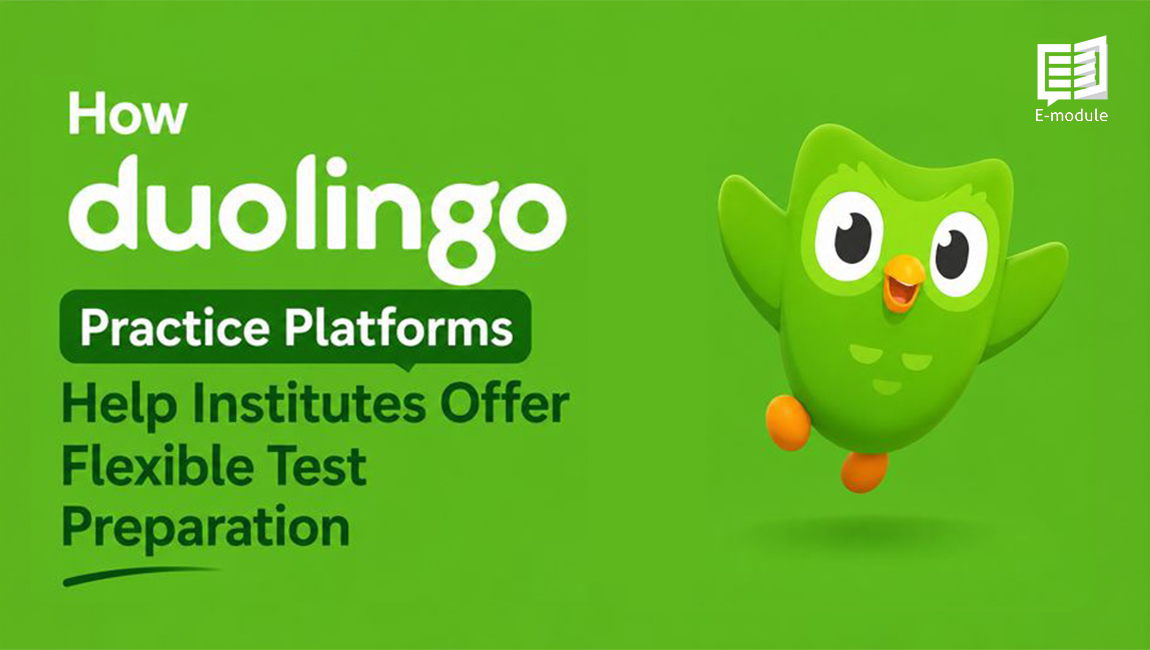
As a result, the way preparation happens has quietly changed. Students now look for something that fits into their day instead of changing their whole routine for it. That’s where a Duolingo practice platform for coaching starts making practical sense.
It’s not about replacing everything else. It’s about having an alternative that feels more manageable.
Let's learn what exactly the Duolingo English Test is.
In simple terms, it’s an English test that one can take from home. No center, no long booking process, just a proper setup, and that’s it. This test usually takes about an hour, and results come quickly—mostly within two days (48 hours).
One thing that stands out is how the test processes. It’s adaptive. That means the questions don’t stay the same throughout. If you’re doing well, the level changes. If not, it adjusts accordingly. So in a way, the test follows you.
For many students, this feels less rigid than traditional exams.
Reasons: Students Find It More Manageable?
It wouldn’t be right to call it “easy.” But yes, it does feel more manageable for certain people.
First, it’s shorter. You’re not sitting for long hours. Second, there’s no test center pressure—no travel, no unfamiliar environment. You’re in your own space.
Also, the format is quite direct. You don’t feel overloaded with too many sections at once. For students who get tired quickly or feel anxious in formal exam setups, this makes a noticeable difference.
Who Should Actually Consider Duolingo?
This is something students often skip thinking about.
Duolingo works well if:
For these situations, Duolingo doesn’t just look convenient—it actually fits better.
Why Institutes Are Slowly Adapting
Students have started asking for Duolingo preparation more frequently. Naturally, institutes can’t ignore that.
But the issue earlier was simple—there wasn’t a clear structure for preparing students. It’s not like traditional exams, where everything is already defined in coaching formats.
So many institutes were either trying random methods or skipping it altogether.
That gap is where proper practice systems started becoming important.
Where Practice Platforms Come In
This is the point where things start getting practical.
A good Duolingo online test preparation software doesn’t just give questions—it gives a proper way to practice.
Students are not stuck to fixed timings. They can practice whenever they get time. Morning, evening, late night—it’s flexible. They can repeat tests, learn from mistakes, and improve gradually.
From an institute’s side, it simplifies things. No need to create separate practice systems again and again. Everything:testing, scoring, tracking—all in one place.
What’s Happening in the Market Right Now
If we observe other platforms, most of them are doing something, but not always completely done.
Some offer very few mock tests. Some are expensive. Some don’t really match the actual Duolingo test experience.
Because of that, students sometimes prepare in one format and face something slightly different in the real exam.
How E-module Fits Into This
Now this is where something like E-module actually becomes useful—not in theory, but in day-to-day use.
The idea is simple. Instead of making a simple preparation complicated, just give students a setup that feels real.
On the E-module portal, there are 25 full-length mock tests and a wide variety of practice questions, and they’re designed in a way that matches the actual Duolingo pattern closely. To add on, the content keeps getting updated, so it will never feel obsolete.
Another crucial feature of the E-module practice portal is that after every test, students get a real exam like TRF report. That helps them see where they stand, what’s improving and where they still need to work on.
One small but important thing—results come instantly. No waiting. The scorecard is visible as soon as the test is done.
The platform has AI-based scoring, so students get a quick evaluation without depending on manual checking. Along with that, there’s a solution section, where students can compare their answers with ideal responses and understand mistakes properly.
Practice is also divided into levels—easy, moderate, hard, expert—so students don’t feel stuck at one point.
And yes, it covers all the modules—interactive reading,interactive listening, writing, speaking—so nothing is left out.
Where Does Flexibility Actually Come In?
Flexibility here is not just about time. It’s about how smoothly someone can continue with the preparation.
Students don’t have to wait for offline classes or depend on fixed schedules of classes. They can practice when they’re free and keep on improving.
For institutes, it removes a lot of effort. They don’t need to build systems from scratch or manage everything manually. They can handle as many students as they want and still keep things organized.
What Both Sides Get Out of It
For coaching institutes, it becomes easier to expand their business and offer Duolingo preparation without adding extra pressure on students. It also helps maintain consistency in results.
For students, the process becomes clearer. They can take a free trial test and understand the exam better, get enough practice, and feel more prepared before the actual exam.
Final Thought
The way students prepare has already changed. Flexibility is no longer optional—it’s expected.
Duolingo fits into that space naturally, especially for those who need something quicker and easier to manage,learn, and understand.
And when preparation is supported by something like a Duolingo practice platform for coaching, it simply makes the whole process smoother.
If you want to explore it in a practical way, you can check emodule and see how structured practice can actually fit into your routine without making things complicated.
?