At some point during the study-abroad or immigration process, almost every student hits the same wall: which English proficiency test should I take? The options are real, the differences matter, and the wrong choice can cost you time, money, and a visa slot.
The honest answer? There’s no universal “best” exam. Each test was designed with a different student in mind, and understanding those differences is what actually helps you decide. This is a straight English test comparison — no filler, no bias — so you can make an informed choice based on your own situation.
A Quick Look at All Three
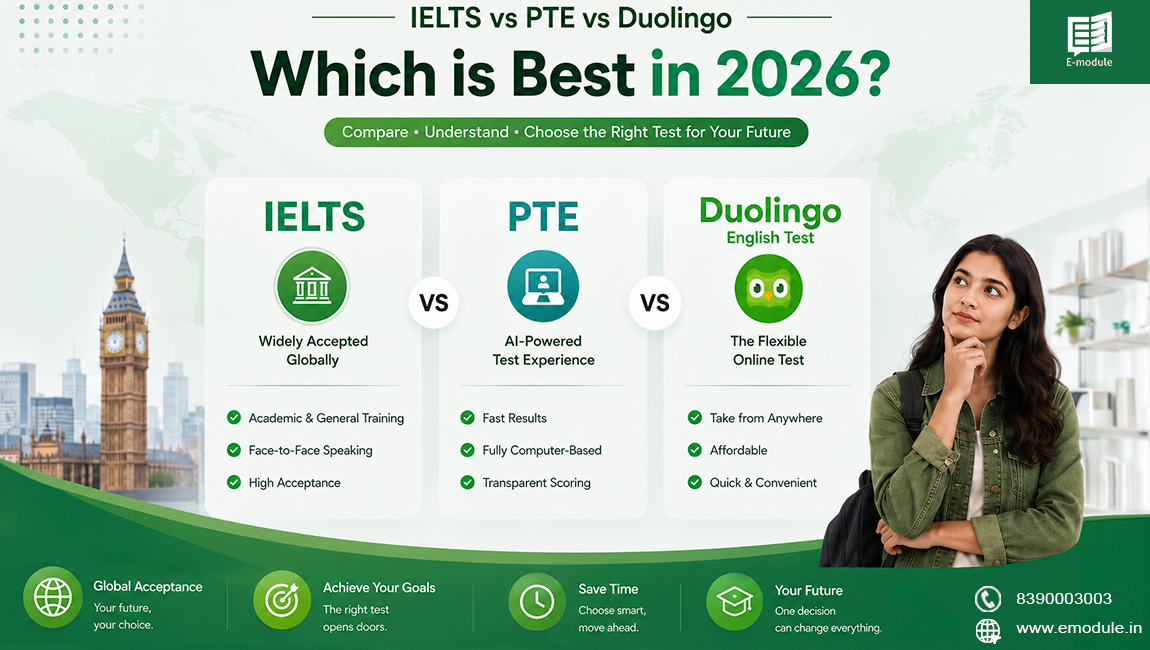
Before going deeper, here’s how the three exams compare side by side:
Which Exam is Better: IELTS, PTE Academic/Core, or Duolingo English Test?
FORMAT:
IELTS is a computer-delivered exam conducted at authorised test centres.
PTE Academic/Core is fully computer-based and also taken at authorised centres.
Duolingo English Test is completely online and can be taken from home.
DURATION:
IELTS takes approximately 2 hours and 45 minutes.
PTE Academic/Core takes around 2 hours.
Duolingo English Test is the shortest, taking only about 1 hour.
RESULT TIME:
IELTS results are usually available within 3–5 business days.
PTE Academic/Core results are generally released within 2–5 business days.
Duolingo English Test provides results within 48 hours.
VALIDITY:
All three exams — IELTS, PTE Academic/Core, and Duolingo English Test — have a validity period of 2 years.
SKILLS TESTED:
All three exams assess the four main English language skills:
GLOBAL ACCEPTANCE:
IELTS has the widest global acceptance for universities, work, and immigration.
PTE Academic/Core is accepted by many universities and immigration authorities worldwide.
Duolingo English Test is accepted by thousands of universities globally, though acceptance may vary by institution.
TEST CENTRE REQUIREMENT:
IELTS and PTE Academic/Core must be taken at authorised test centres.
Duolingo English Test does not require a test centre since it is taken online from home.
ADAPTIVE TESTING:
IELTS is not adaptive.
PTE Academic/Core is also non-adaptive.
Duolingo English Test is fully adaptive, meaning the difficulty level changes based on performance.
APPROXIMATE FEE:
IELTS costs approximately ?17,000–18,500.
PTE Academic/Core costs around ?17,000–19,000.
Duolingo English Test is more affordable, usually costing ?10,000–12,000.
FINAL COMPARISON:
Choose IELTS if you want maximum global recognition and strong immigration acceptance.
Choose PTE Academic/Core if you prefer a fully computer-based testing experience.
Choose Duolingo English Test if you want a faster, cheaper, and more convenient at-home exam option.
Now let’s look at each exam on its own terms.
IELTS — The Most Widely Recognised Name
When people think of the English proficiency test, IELTS is usually the first name that comes to mind. It’s been around since 1989 and carries the kind of institutional trust that comes from decades of acceptance. In the IELTS vs PTE conversation, acceptance is where IELTS consistently holds the advantage — it’s recognised by universities, immigration departments, and professional bodies across more countries than any other test.
The exam itself has two versions: Academic (for university admissions) and General Training (for immigration and work visas). It tests all four skills — Reading, Listening, Writing, and Speaking — with the Speaking component delivered as a face-to-face interview with a human examiner. For many students, that human element feels more natural. For others, it’s a source of anxiety.
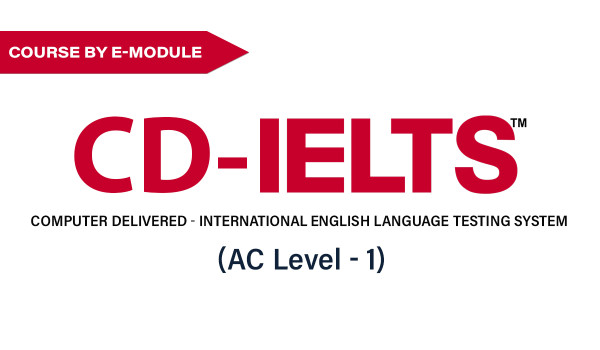
The shift to CD-IELTS (computer-delivered IELTS) has made the test more accessible, though test centres are still required. Results take three to five business days, and the fee sits around ?17,000–18,500 depending on your location.
IELTS tends to suit students who:
• Are applying to universities in the UK, Australia, Canada, or New Zealand
• Need their score accepted by a professional licensing body
• Prefer a structured, well-established exam format
• Are comfortable with a face-to-face Speaking interview
PTE — Fully Computer-Based, Fast, and Consistent
PTE Academic has carved out a strong following, particularly among students applying to Australian universities and those going through skilled migration pathways. In the IELTS vs PTE debate, PTE’s biggest advantage is consistency — because it’s entirely AI-scored, there’s no variation in how your responses are evaluated. Every student is assessed against the same criteria, every time.
PTE now has two versions: PTE Academic (for university admissions globally) and PTE Core (introduced for Canadian immigration). Both are computer-based, held at authorised centres, and return results within two to five business days.
The format integrates skills within tasks — a single question might test your listening, reading, and writing simultaneously. That integration can feel challenging at first, but students who prepare specifically for PTE’s question types tend to find it very manageable.
PTE tends to suit students who:
• Are applying to Australian, New Zealand, or UK universities
• Are pursuing Canadian immigration through PTE Core
• Prefer AI-based, objective scoring over human examiner assessment
• Want a fully computer-delivered experience at a test centre
Duolingo English Test — Modern, Flexible, and Growing Fast
The Duolingo vs IELTS conversation has shifted significantly over the last two years. What started as a convenient alternative for students during the pandemic has become a genuinely mainstream option. Thousands of universities globally — including many in the US, Canada, UK, and Europe — now accept DET scores.
The format is unlike either IELTS or PTE. It’s fully adaptive, meaning every question adjusts to how you’re performing in real time. It’s taken at home, from any device with a camera and stable internet. The whole thing takes about an hour, and results arrive within 48 hours. The fee is also significantly lower — around ?10,000–12,000.
The trade-off is acceptance. While DET’s university acceptance list is growing fast, it’s still not as universally recognised as IELTS for immigration purposes or professional licensing. Before choosing DET, it’s worth confirming that your specific target universities or visa pathway accepts it.
Duolingo tends to suit students who:
• Are applying to universities that confirm DET acceptance
• Prefer a shorter, home-based exam experience
• Want faster results and a lower test fee
• Are comfortable with an adaptive, technology-driven format
The Real Deciding Factors
Once you move past the surface-level English test comparison, the decision usually comes down to three things:
Your destination and purpose. Check what your target university, immigration stream, or licensing body officially accepts. This alone eliminates most of the confusion. If only one test is accepted, that’s your test.
Your timeline. Need results in 48 hours? Duolingo. Have two weeks? Any of the three works. Results urgency matters more than most students initially account for.
Your comfort with the format. Some students do better with a structured, centre-based exam. Others perform well from home. Neither is wrong — it’s about knowing yourself. If you’ve consistently struggled with speaking in front of people, a face-to-face IELTS interview might not be your best setting. If you’re easily distracted at home, Duolingo’s home format might work against you.
Whichever Exam You Choose, Preparation Is the Variable
Here’s the thing no comparison article can change: your score depends on how well you prepare, not just which exam you pick. Students who go into any of these tests underprepared — regardless of how “easy” the format seems — consistently underperform.
That’s where E-module comes in. Whether you’re preparing for IELTS, PTE, or the Duolingo English Test, E-module’s AI-powered platform covers all three — under one login, one dashboard, and at your own pace.
• IELTS: 80+ sectional tests, full mock tests for Academic and General Training, AI evaluation based on real band descriptor parameters, TRF-style reports
• PTE: 80+ sectional tests, 5+ full mock tests, 1,200+ practice questions each for PTE Academic and PTE Core, instant AI evaluation, exam-like TRF report
• Duolingo English Test: 25+ full-length mock tests, purely AI-evaluated, instant results, TRF report after every test, Interactive Listening and Reading practice, Writing and Speaking samples
Everything is AI-evaluated, your feedback is instant — no waiting for a tutor’s availability to know where you stand.
Decide your exam first. Then prepare for it properly. That order matters more than anything else in this comparison.
FAQs
Is IELTS harder than PTE?
Not inherently. The difficulty depends on your strengths. IELTS has a human examiner for Speaking, which some students find more natural and others find more stressful. PTE integrates skills within tasks, which feels unfamiliar at first but becomes manageable with practice. Neither is objectively harder — they’re just different.
Is the Duolingo English Test accepted everywhere?
No, not yet. DET acceptance has grown significantly and thousands of universities now accept it, but it’s not universally recognised for immigration or professional licensing the way IELTS is. Always confirm acceptance with your specific institution or visa pathway before registering.
Which exam gives results fastest?
Duolingo delivers results within 48 hours. PTE and IELTS both take two to five business days. If your application deadline is close, Duolingo has a clear timing advantage — provided it’s accepted by your target institution.
IELTS vs PTE vs Duolingo – Which is Best in 2026?
Yes. E-module covers IELTS, PTE, and Duolingo English Test on a single platform. You can access sectional tests, full mock tests, AI evaluation, and TRF-style reports for all three exams without switching tools.
Which exam is cheaper — IELTS, PTE, or Duolingo?
Duolingo is significantly cheaper, with test fees around ?10,000–12,000. IELTS and PTE both sit around ?17,000–19,000 depending on your location. However, the test fee should be a secondary consideration after checking which exam your institution or immigration stream actually accepts.
How many mock tests should I take before the real exam?
At minimum, four to five full-length mock tests under real exam conditions. The more familiar the format feels before test day, the less cognitive energy you spend on understanding what’s being asked — and the more you can direct toward actually answering well.