Let me ask you something. How long have you been thinking about starting your own coaching institute?
A few months? A year? Maybe longer?
Most people in this space have the knowledge, they have the contacts, often they even have students lined up informally — friends referring to friends, neighbours asking for help. But they keep waiting. Waiting for the right time, the right setup, enough savings to rent a proper space.
I get it. The traditional image of a coaching business online still feels like it needs a classroom, printed material, a whiteboard, maybe a receptionist. That image is outdated. And clinging to it is quietly what’s stopping a lot of genuinely capable people from starting.
What the English Test Coaching Market Actually Looks Like Right Now
Canada PR applications. UK skilled worker visas. Australian migration. Study abroad for the US, UK, Ireland, Germany. Every one of these pathways requires an English proficiency score — IELTS, PTE, CELPIP, Duolingo, TOEFL. And every year, the number of applicants goes up.
This isn’t a trend. It’s structural demand. It doesn’t dry up when the economy shifts. People don’t stop wanting to migrate or study abroad.
What’s interesting is where the gap is. Big cities have plenty of coaching options. But students in Ludhiana, Jalandhar, Amritsar, Surat, Nagpur, Coimbatore — mid-sized cities with real demand — often have limited access to quality digital preparation. Online coaching fills that gap without you needing to physically be there.
And what students want has shifted. They’re not asking for a classroom seat anymore. They want mock tests they can take at midnight. Instant results. A score report that tells them exactly which section to fix. If your institute offers that — properly — you’re already ahead of most.
Okay, So Where Do You Actually Start?
Not with software. Not with a website. With a decision.
Which exam are you coaching for? Pick based on your students, not based on what sounds most impressive. If you’re based in Punjab or anywhere with heavy Canada immigration traffic, IELTS General Training and CELPIP are your bread and butter. Students going to Australian universities lean toward PTE Academic. US-bound students are increasingly using Duolingo. TOEFL remains strong for US and European university admissions.
You don’t have to cover all of them from day one. In fact, trying to do so before you’ve built a system is one of the faster ways to burn out early. Pick one or two. Get good at delivering results for those. Then expand.
The Setup Is Simpler Than You
Think Registration first. Sole proprietorship is the easiest starting structure in India. Don’t let the paperwork become a six-month delay. It’s a few forms.
Physical space — genuinely optional if you’re going online. Some institute owners start from a spare room at home, build a student base over six months, then move into a proper space once they have the revenue to justify it. That sequence makes a lot more sense than signing a lease before you have ten paying students.
Pricing. Look at what’s being charged locally. Don’t undercut so aggressively that you devalue what you’re offering. If your preparation is genuinely better — proper mock tests, instant AI feedback, real score reports — that’s worth a reasonable fee. Students and parents in this market are not purely price-driven. Results drive decisions.
The Part Most People Get Wrong — The Software
Here’s what typically happens. Someone decides to start a coaching institute, buys a domain, sets up a WhatsApp group, and starts sharing PDFs and YouTube links. That’s not a coaching business. That’s a study group.
To run an actual institute — even a small one — you need your students to be able to take structured mock tests, get results they can act on, and track their own improvement over time. And you need to be able to see all of that without spending three hours a day manually checking who did what.
That’s what proper online coaching software does. And the version that makes the most sense for an institute focused on English proficiency exams is one that’s already built for exactly that — not a generic LMS you’re trying to adapt.
This is where the E-module comes in. It’s built specifically for IELTS, PTE, CELPIP, TOEFL, and Duolingo coaching. Fully white-labelled — when your students log in, they see your institute’s name and logo. Not E-module’s. Yours.
What E-module Offers B2B Partners — All Five Exams at ?10,000
Here’s something worth stating clearly before getting into the details. Every exam on E-module — IELTS, PTE, CELPIP, TOEFL, and Duolingo — is available to B2B partners at a nominal pricing of ?10,000. One flat price. No hidden charges per student, no per-ID fees, no surprise costs. You pay once and get a fully functional, white-labelled portal ready to serve your students from day one.
That’s the headline. Now here’s what’s actually included for each exam.
CD-IELTS
IELTS has moved to computer-delivered format and E-module’s content is built around that. Partners get 80+ sectional tests and 5+ full mock tests — and importantly, these are split across Academic Level 1 and Level 2 and General Training Level 1 and Level 2 separately. Students preparing for Academic don’t have to wade through GT content and vice versa.
On top of that:
• Focus courses for each module — dedicated Reading, Writing, Listening, and Speaking practice tracks
• TRF-style report after every test with detailed section-wise performance and mistake analysis
• Instant AI evaluation based on real IELTS band descriptor parameters
• Continuously updated and expanding content — stays current with how the exam actually looks
• Completely white-labelled portal — your institute’s branding throughout
PTE
PTE now has two versions that serve different purposes — PTE Academic for university admissions and PTE Core for Canadian immigration. E-module covers both, separately, so students aren’t preparing for the wrong version of the exam
. • 80+ sectional tests and 5+ full mock tests for each — PTE Academic and PTE Core treated as distinct courses
• 1,200+ practice questions per exam type, not shared across both
• Exam-like TRF report after every mock test with instant results
• Purely AI-evaluated — consistent, objective, no manual review needed
• Completely white-labelled portal
CELPIP
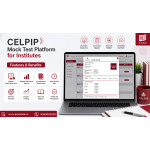
CELPIP is increasingly the preferred test for Canadian PR and citizenship applications. E-module covers both pathways — CELPIP General and CELPIP General LS — with content built specifically for each
. • 80+ sectional tests and 5+ full mock tests for both CELPIP General and General LS
• CELPIP Master Program included — a structured preparation track for students who need a more guided approach
• TRF-style report after every test with instant AI evaluation
• Continuously updated content aligned with current CELPIP exam patterns
• Completely white-labelled portal
TOEFL
TOEFL remains a strong requirement for US university admissions and several European institutions. For institutes serving students in that pipeline, E-module’s TOEFL content covers the full exam with the same standard of preparation.
• 80+ sectional tests and 5+ full mock tests
• Exam-like TRF report after every test with instant results
• Purely AI-evaluated — objective scoring, no manual checking
• Completely white-labelled portal
Duolingo English Test
Duolingo English Test acceptance has grown significantly and a lot of institutes are now adding it to their offering. E-module’s Duolingo preparation is available to B2B partners at the same ?10,000 price point, with no compromise on content or evaluation quality.
• 25+ full-length mock tests covering the complete adaptive exam format
• All sections covered — Interactive Listening, Interactive Reading, Writing, and Speaking samples
• Exam-like TRF report after every test
• Instant results with complete AI evaluation
• Continuously updated practice questions that reflect current DET patterns
• Completely white-labelled portal
To be clear about what that ?10,000 covers: it’s not a per-student fee. It’s access to the full exam content, the white-labelled portal, AI evaluation, TRF reports, and the partner dashboard — for as many students as you enrol using your credit allocation. No surprise bills. Overall, in 10,000 you can assign any course to your students.
The Institute Management Side
Content is one part of it. The other part — which a lot of software products ignore — is actually running the institute day to day.
E-module’s partner dashboard handles that. Add unlimited students, assign them to specific exam courses, track their mock test history and section scores, and download Excel reports whenever you need them. No manual data entry. No chasing students for updates. No spreadsheet that someone forgot to update.
• Unlimited student accounts with no per-ID charges
• Course assignment and access control from one dashboard
• Real-time performance tracking across all exams
• Excel report downloads for reviews, internal tracking
• Secure student data management
• Free demo and full onboarding support— no tech team needed on your end
The whole point of this is that your team spends less time managing admin and more time doing what actually grows the business — teaching and student outcomes.
Getting Your First Students
This is the part people overthink. You don’t need a big marketing budget to get your first twenty students. You need to be visible where your students are looking.
Google Business profile: Set it up today. It’s free. When someone in your city searches for “IELTS coaching” or “PTE classes near me,” you want to appear. Even a handful of early reviews makes a real difference in local search visibility.
Referrals: One student who scores well and talks about your institute is worth more than a paid ad. Make referrals easy. Acknowledge them. A small gesture goes a long way, especially in cities where everyone in the immigration community knows each other.
Content: Short videos on Instagram or YouTube — “Why IELTS Writing Task 2 loses students marks” or “PTE Core vs PTE Academic: which one for Canada?” — build trust over months. Not overnight. But consistently. Start one channel, post regularly for sixty days, then assess.
Three channels. Work them properly before adding more.
When to Think About Scaling
Not yet. First, get your system right.
Most small institutes plateau not because demand dries up, but because everything runs through one person. Enrolments on personal WhatsApp. Fees in cash. Progress tracked mentally. That model has a hard ceiling.
Once your online coaching software is handling mock tests, results, reports, and student tracking automatically — and your team isn’t spending hours on those things manually — that’s when scaling becomes possible without everything falling apart.
Fifty students managed by a system is easier than twenty managed manually. Get the system right with a small batch first.
A Real Timeline
Week 1–2: Register the business. Set up an E-module, get the branding in place, go through onboarding. Spend time in the partner dashboard until it feels familiar.
Week 3–4: Launch with your first batch. Five students is fine. Ten is great. Run them through mock tests, review TRF reports together, see where they’re dropping marks. Month 2: Ask for testimonials — especially score improvements. Activate one marketing channel. Build referral habits with your first batch.
Month 3+: You now have real data. Which exam has more demand is what students are asking for. Make decisions based on actual numbers, not assumptions.
Institutes that follow this are generating consistent revenue by month three. The ones still “getting ready to launch” at month six usually haven’t fixed one thing: they haven’t started.
Honestly, the Hard Part Isn’t the Setup
Starting a coaching business online — at least the infrastructure side — is the easy part now. White-label software, digital mock tests, AI evaluation, instant results, exam-wise TRF reports. All of it exists, accessible at a low entry point.
The hard part is committing. Launching before it feels perfectly ready. Charging real fees with your first real batch. Asking for reviews when it feels awkward.
E-module handles the platform — all five exams, your branding, student management, AI evaluation, the works. You handle the students. That’s the split. And it works from day one, not from some imaginary future date when everything is finally in place.
If you want to see it before deciding, the demo is an hour. Worth it.
FAQs
Do I need a physical office to start?
No. Plenty of institutes run fully online from day one. You need a laptop, decent internet, and a platform that gives students a professional experience. Physical space is something you add once revenue supports it — not a prerequisite for launching.
What’s the actual cost to get started with an E-module?
B2B access for — IELTS, PTE, CELPIP, or TOEFL — starts at ?10,000. Credit-based pricing means you’re not paying for capacity you don’t use.
Can one platform handle all five exams?
Yes. IELTS, PTE, CELPIP, TOEFL, and Duolingo are all available on E-module under your institute’s white-labelled portal. Students access whichever exam they’re preparing for through the same login.
What’s the difference between B2B and B2C pricing on E-module?
B2B plans (IELTS, PTE, CELPIP, TOEFL,Duolingo English Test) are priced at ?10,000 and give your institute full access to the white-labelled partner portal, partner dashboard, student management, and complete exam content.
How does white-labelling work in practice?
Your students log into a portal with your institute’s name, logo, and colours. The E-module is not visible to them at any point. All content, AI evaluation, and score reports run under your brand in the background.
Do I need a technical team to manage the platform?
No. Onboarding support is included and the partner dashboard is built for non-technical users. If you can navigate a basic web dashboard, you’re good to go.