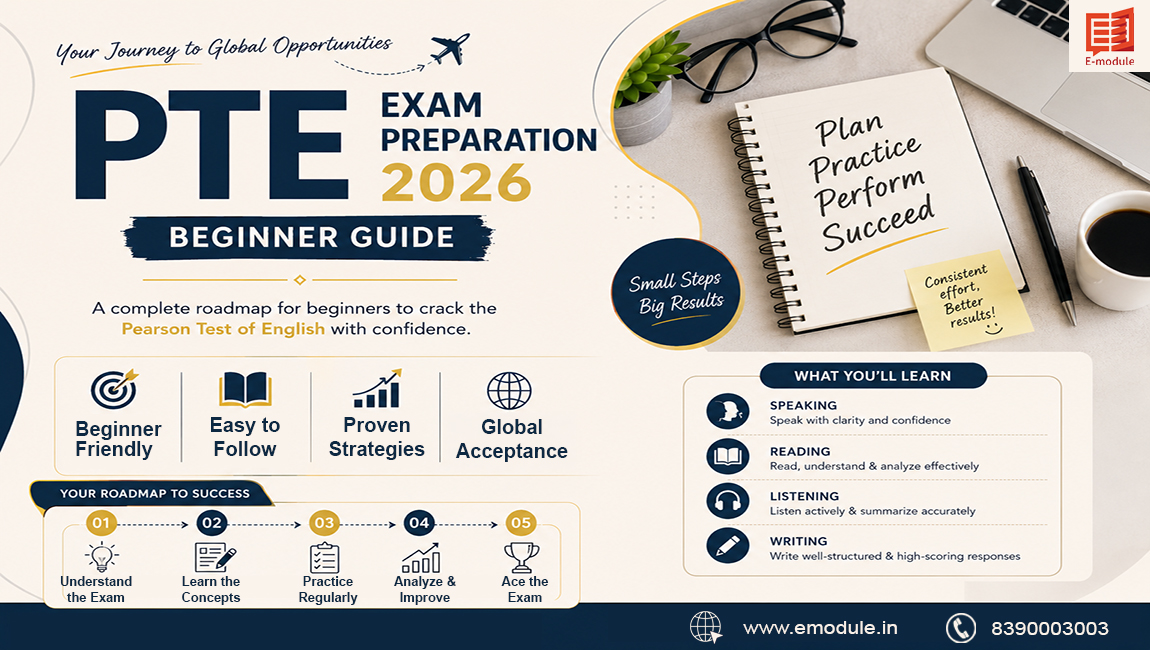
The PTE exam has grown to be one of the most popular English proficiency exams among students who intend to study, work, or relocate overseas in recent years. That change has become much more apparent in 2026. Convenience is a key factor. Exams that are faster, entirely computer-based, and yield faster results are now preferred by students.
PTE places a greater emphasis on computer-based responses and real-time contact than traditional tests. The test assesses not only your proficiency in English but also your ease in responding in timed digital environments. Because of this, preparing for the PTE exam preparation now looks significantly different from how it did in the past.
Instead of depending just on notebooks or random PDFs, students are using AI-based practice platforms, self-paced learning modules, and actual exam-like mock exams.
This may initially seem perplexing to novices. However, preparation becomes a lot more manageable once you comprehend the structure and adhere to an appropriate PTE study plan.
Comprehending PTE Core and PTE Academic
Students should first comprehend the distinction between the two formats before beginning preparation.
PTE Academic
PTE Academic is primarily utilised for:
PTE Core
PTE Core is primarily intended for:
Migration
Applications relevant to the workplace
Daily communication abilities
More realistic and practical communication tasks, such as the more recent video and speaking-based question types, are included in the test.
As exam standards continue to change, many students preparing for 2026 are now selecting sites that provide preparation for both formats simultaneously.
Current PTE Trends and Updates for 2026
It's crucial for newcomers to understand that PTE is now more than just memorising templates.
Recent exam updates focus more on:
Newer task styles, especially in PTE Core, now assess how naturally students respond in practical situations. This is why practicing in a real computer-based environment matters much more today.
Modern PTE coaching online platforms are now using AI evaluation systems similar to actual exam scoring, helping students understand their performance instantly.
Common Problems Beginners Usually Face
Most beginners struggle with similar issues during the early stages of preparation:
Interestingly, many students already know basic English fairly well. Their real challenge is adapting to the exam environment itself.
That’s why structured practice becomes important.
Beginner-Friendly PTE Study Plan
Eight to ten hours a day are not necessary for a practical PTE study plan.Long study hours are not as important as consistency.
Week 1: Recognise the Exam Structure
Start by learning:
Spend time exploring speaking, writing, reading, and listening modules separately.
Week 2 – Build Core Skills
Focus more on:
These tasks contribute heavily to the overall scoring.
Week 3 –Mock Test Practice
This is where improvement becomes visible.
Start attempting:
Review mistakes carefully instead of only checking scores.
Week 4: Confidence and Accuracy
Focus mainly on weak areas:
At this stage, overstudying usually creates stress. Smart revision works better.
Section-Wise PTE Preparation Tips
Speaking
Speaking often feels difficult initially because responses are recorded.
Writing
For writing tasks:
Many students lose marks simply because typing speed affects timing.
Reading
Reading requires concentration and quick understanding.
Listening
Listening becomes easier with regular exposure.
Why Mock Tests Matter More in 2026
One major difference between average preparation and effective preparation is mock testing.
This is why AI-based mock platforms are becoming more useful for modern PTE exam preparation.
Instead of waiting days for feedback, students can now understand:
within seconds after finishing a test.
How Online PTE Preparation Platforms Help Beginners
For beginners, especially, flexible learning matters a lot.
A good PTE coaching online platform helps students:
Platforms like E-module now offer:
Many students find that this kind of organised practice is significantly more useful than haphazard preparation techniques.
Typical Errors Beginners Should Avoid
Due to minor but frequent errors, students frequently slow down their progress:
Paying equal attention to each kind of question
Prioritising high-scoring jobs first and progressively increasing consistency is a better approach.
Final Notes
Studying English is no longer the only way to prepare for the PTE in 2026. It is about becoming used to a quick, computer-based exam setting that is evaluated by AI.
The good news is that proficient English is not necessary for novices to achieve high scores. Over time, improvement becomes quite possible with the correct framework, consistent practice, and appropriate exam exposure.
When you first begin your preparation process, prioritise consistency over perfection. Practice frequently, take practice exams seriously, and make use of resources that enable you to comprehend your performance.
The procedure may be made a lot less stressful and much more efficient with the correct preparation strategy and a well-organised platform.
FAQs
What distinguishes PTE Core from PTE Academic?
PTE Core concentrates more on communication skills linked to jobs and migration, whereas PTE Academic is mostly for study and university applications.
How much time does it typically take to prepare for the PTE at the basic level?
Depending on their intended score and current ability in English, most beginners need to prepare consistently for four to eight weeks.
For PTE practice, is AI-based scoring accurate?
Indeed. AI evaluation methods that closely resemble real PTE rating criteria are now used on several contemporary platforms.
Why are practice exams crucial for PTE preparation?
Students can improve their timing, speaking under pressure, typing speed, and general exam flow by taking mock exams.
Can I do all of my PTE preparation online?
Indeed. With the use of online resources that provide sectional tests, AI scoring, and comprehensive mock exams, many students are now able to properly study.
In PTE, what should novices concentrate on first?
Beginners should first comprehend the format of the test and concentrate on high-weight problems such as Fill in the Blanks, Read Aloud, and Repeat Sentence.